
Ford Escape: Fuses and relays
Fuses
If electrical components in the vehicle are not working, a fuse may have blown. Blown fuses are identified by a broken wire within the fuse. Check the appropriate fuses before replacing any electrical components.
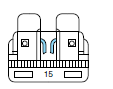
Note: Always replace a fuse with one that has the specified amperage rating. Using a fuse with a higher amperage rating can cause severe wire damage and could start a fire.
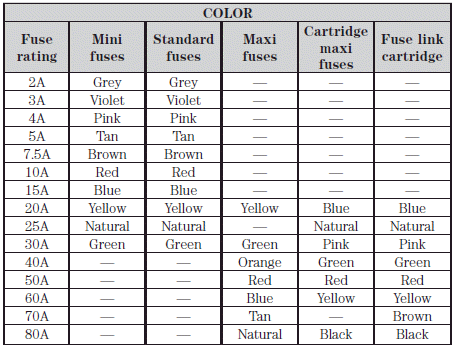
Standard fuse amperage rating and color
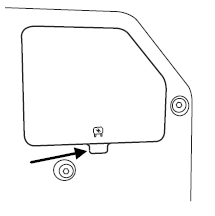
Passenger compartment fuse panel
The fuse panel is located on the right-hand side of the center console, by the instrument panel.
Remove the panel cover to access the fuse cover. Press the tabs on the top and bottom of the fuse cover to remove.
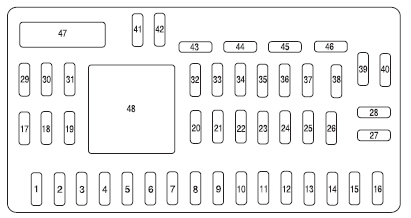
The fuses are coded as follows
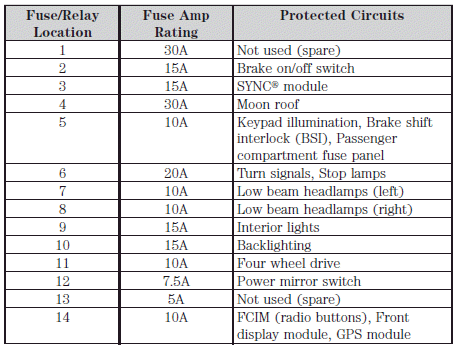
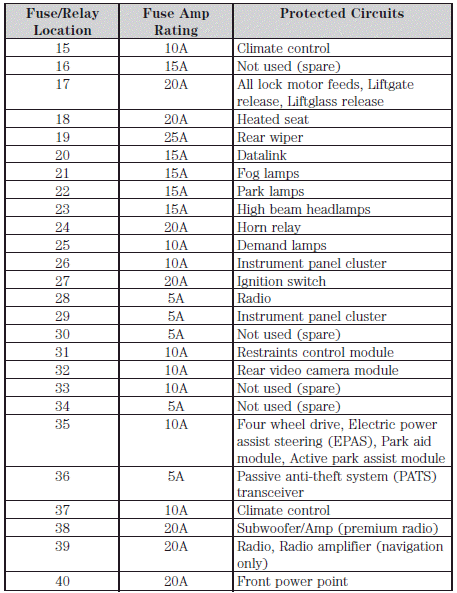
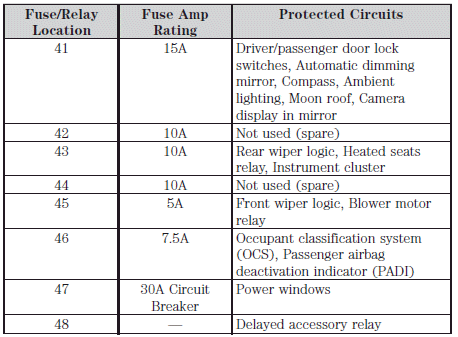
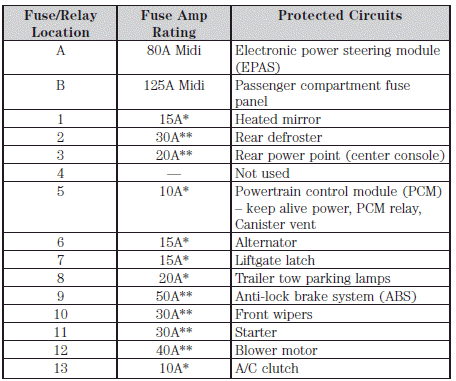
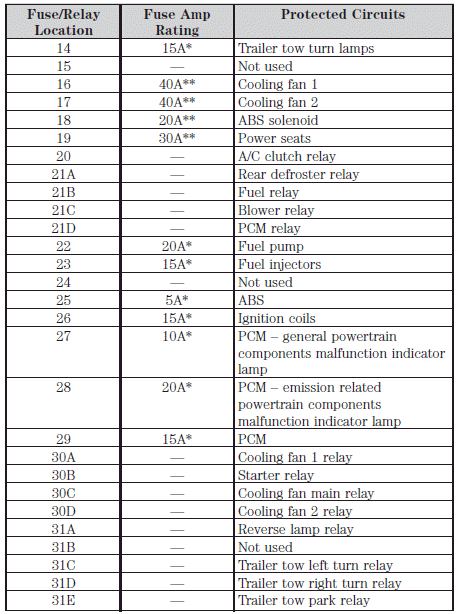
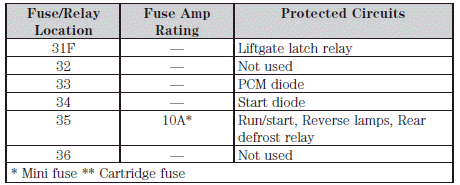
Power distribution box
The power distribution box is located in the engine compartment. Refer to the Identifying components in the engine compartment section of the Maintenance and Specifications chapter for the location. The power distribution box contains high-current fuses that protect your vehicle’s main electrical systems from overloads.
 WARNING: Always disconnect the battery before servicing high
current fuses.
WARNING: Always disconnect the battery before servicing high
current fuses.
WARNING: To reduce risk of electrical shock, always replace
the cover to the Power Distribution Box before reconnecting the
battery or refilling fluid reservoirs.
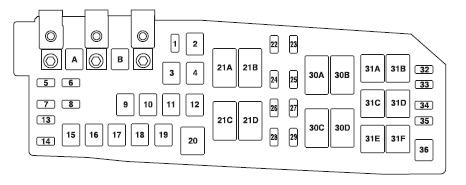
The high-current fuses are coded as follows.
 Roadside Assistance
See also:
Alarm system
The alarm system helps to protect your
vehicle and valuables from theft. The horn
sounds and the turn signal lights flash if
someone attempts to break into your
vehicle. The starter motor is also interrupted
to prevent starting the vehicle ...
Fuel Recommendation
Your vehicle requires regular unleaded gasoline with a minimum rating of 87 pump octane ((R + M)/2 method). In some areas, the only fuels that are available are oxygenated fuels. Oxygenated fuels which meet the minimum octane requirement and t ...


