
Ford Escape: Gauges
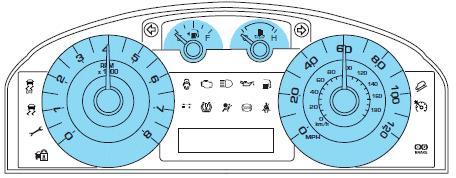
Base instrument cluster shown in standard measure. Metric similar.
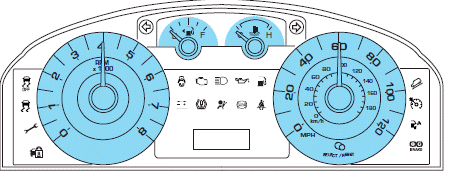
Optional instrument cluster shown in standard measure. Metric similar.
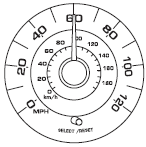
Speedometer: Indicates the current vehicle speed.
Engine coolant temperature gauge: Indicates engine coolant temperature. At normal operating temperature, the needle will be in the normal range (between “H” and “C”). If it enters the red section, the engine is overheating. Stop the vehicle as soon as safely possible, switch off the engine and let the engine cool.

 WARNING: Never remove the coolant reservoir cap while the
engine is running or hot.
WARNING: Never remove the coolant reservoir cap while the
engine is running or hot.
Fuel gauge: Indicates approximately how much fuel is left in the fuel tank (when the ignition is in the on position). The fuel gauge may vary slightly when the vehicle is in motion or on a grade.
The FUEL icon and arrow indicates which side of the vehicle the fuel filler door is located.
Refer to Filling the tank in the Maintenance and Specifications chapter for more information.

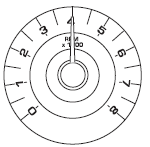
Tachometer: Indicates the engine speed in revolutions per minute.
Driving with your tachometer pointer continuously at the top of the scale may damage the engine.
Odometer: Registers the total miles (kilometers) of the vehicle.
If equipped with a message center, refer to Message center in this chapter on how to switch the display from Metric to English.
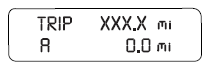
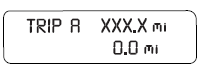
Trip odometer: Registers the miles (kilometers) of individual journeys.

Trip odometer: Registers the miles (kilometers) of individual journeys.
• Standard instrument cluster:
Press the SELECT/RESET control once to switch from the odometer to the TRIP A feature. Press the control again to select the TRIP B feature. To reset the trip, press and hold the control again until the trip reading resets.
• Optional instrument cluster:
See TRIP A/B under Message center in this chapter.
 Warning lights and chimes
See also:
Fuel selection
CAUTION:
● Your vehicle is designed to use only diesel fuel that meets the EN 590 standard.
Use of any other type of diesel fuel can adversely affect the engine. ...
Automatic climate control system (if equipped)
NOTE
Operate the automatic climate control
system when the engine is running. ...


